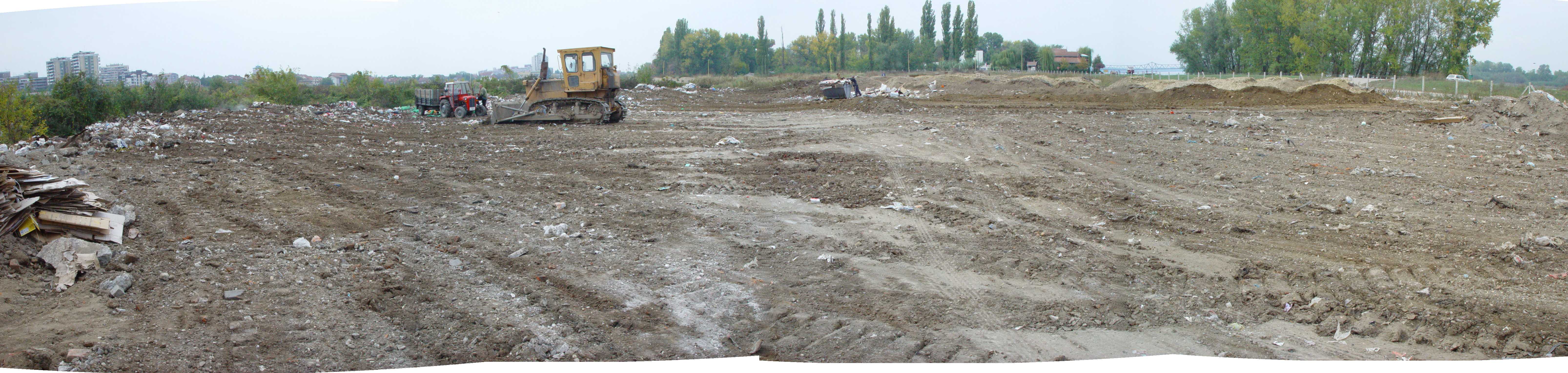
Environmental cooperation across South Eastern Europe
The Regional Environmental Center Country Office for Serbia and Montenegro supported environmental policy, capacity building, and EU approximation throughout the region from its base in Belgrade.
Part of the REC network headquartered in Szentendre, Hungary, the office coordinated projects spanning municipal waste management, Aarhus Convention implementation, and sustainable development initiatives — working with government ministries, NGOs, and international donors.

REMUS — Waste Management
Regional Municipal Waste Management Plan, financed by the Japan Special Fund, bringing together six municipalities for coordinated solid waste planning.
Learn more
REReP 1.9 — EU Approximation
Capacity Building for EU Approximation in South Eastern Europe, implemented in partnership with GTZ across multiple countries.
Learn more
Aarhus Convention — REReP 2.2
Support to the Implementation of the Aarhus Convention in SEE, backed by the Netherlands Government, advancing environmental democracy.
Learn more
Interactive Farm Pilot
Pilot model for sustainable development in Lukavica village near Dimitrovgrad, promoting Balkan agro-genetic resources with REC and EC EuropeAid support.
Learn more
Environmental Media
Cooperation on producing and broadcasting environmental media quality information, strengthening public awareness across Serbia and Montenegro.
Learn more
Regional Cooperation
Multi-country stakeholder engagement linking Albania, Bosnia and Herzegovina, Bulgaria, Croatia, Macedonia, and Romania on shared environmental priorities.
Learn moreRequest information
Contact the REC for details on environmental projects and cooperation opportunities in South Eastern Europe.
-
1
Identify your needs
Tell us about your environmental policy, project, or cooperation interest in the SEE region.
-
2
Connect with the right team
We route your inquiry to the relevant project officer or country office within the REC network.
-
3
Receive guidance
Get informed about relevant REC programmes, past project results, and potential collaboration pathways.
Environmental expertise across Central and Eastern Europe
The REC Country Office Serbia and Montenegro operated from 2001 to 2004, coordinating projects on EU approximation, waste management, and the Aarhus Convention. The REC network continues its mission from headquarters in Szentendre, Hungary.
Contact the REC (011) 3061-715Part of the REC network since 2001
The Regional Environmental Center for Central and Eastern Europe established its Country Office in Belgrade to serve Serbia and Montenegro — then known as Yugoslavia — during a period of significant political transition and environmental reform.
Working alongside the REC headquarters in Szentendre, Hungary, and country offices in Bosnia and Herzegovina and across the region, the Belgrade office delivered multi-stakeholder projects funded by GTZ, the Japan Special Fund, the Netherlands Government, and EC EuropeAid.
Key events included the REReP 1.9 Planning Workshop in Zagreb (November 2001), Steering Committee meetings in Belgrade and Sofia (2002), and the Aarhus Convention regional strategy meeting at REC headquarters (November 2002).
The Regional Environmental Center for Central and Eastern Europe has maintained a continuous presence in the Western Balkans since the early 2000s, when its Belgrade office first opened during a pivotal era of political transformation. From its base in the Serbian capital, the office has worked hand in hand with national authorities, local municipalities, and civil society groups to advance environmental legislation, strengthen institutional capacity, and raise public awareness about pressing ecological concerns. The office's work reflects a deep commitment to bridging the gap between policy development on paper and tangible improvements in communities across the region.
Multi-stakeholder collaboration lies at the heart of every project undertaken by the Belgrade office. By bringing together government representatives, business leaders, academic researchers, and grassroots organizations around the same table, the office has helped foster dialogue and consensus on complex environmental issues that might otherwise stall in bureaucratic deadlock. This inclusive approach has proven especially valuable in the Western Balkans, where cross-border environmental challenges such as river basin management, air quality, and biodiversity protection demand coordinated responses that transcend administrative boundaries and political divisions.
Over the years, the office has administered a diverse portfolio of initiatives funded through international cooperation mechanisms, including bilateral donor programs and multilateral assistance frameworks. These projects have ranged from practical training workshops for environmental inspectors to comprehensive assessments of industrial pollution hotspots, from public information campaigns on waste management to pilot schemes introducing cleaner production techniques in small and medium-sized enterprises. Each initiative has been tailored to the specific needs and circumstances of the local context, ensuring that international expertise translates into locally relevant solutions.
Environmental education and public participation have consistently ranked among the office's top priorities. Recognizing that lasting environmental progress depends on informed and engaged citizens, the office has organized school programs, community forums, and media outreach efforts designed to make complex environmental topics accessible to diverse audiences. Young people have been a particular focus, with numerous initiatives encouraging students to take an active role in environmental stewardship within their own schools and neighborhoods, thereby cultivating a new generation of environmentally conscious leaders across the region.
The office has also played a significant role in supporting Serbia's and Montenegro's gradual alignment with European environmental standards and practices. Through technical assistance, policy analysis, and capacity building, the office has helped national institutions understand and prepare for the requirements of EU environmental directives, from water quality monitoring to environmental impact assessment procedures. This work has been carried out in close coordination with regional partners and international experts, creating a steady channel for the transfer of knowledge and best practices from established European environmental governance systems.
As environmental challenges evolve, so too does the work of the Belgrade office. In recent years, the focus has expanded to include emerging issues such as climate change adaptation, sustainable urban development, circular economy approaches, and the environmental dimensions of energy transition. The office has positioned itself as a reliable knowledge hub where policymakers, practitioners, and the public can access balanced, scientifically grounded information on these complex topics, helping to inform decisions that will shape the region's environmental future for decades to come.
Looking ahead, the office remains dedicated to its founding mission of improving the environment in the Western Balkans through cooperation, knowledge sharing, and practical action. As part of the broader REC network spanning multiple countries, the Belgrade office benefits from a rich exchange of experience and expertise with sister offices across the region. This network model allows lessons learned in one country to inform approaches in another, multiplying the impact of every project and ensuring that the collective knowledge of the entire organization is brought to bear on the environmental challenges facing the region.